There’s a pile of books by your bed. You finished one in January, started two in March, and you’re not sure where the third went. You like reading. It just keeps losing to everything else.
That’s normal, and it’s fixable. Reading more is less about finding hours and more about making reading easy to start and easy to restart.
Why reading habits stall
Most reading plans fail in the gap between books. You finish one, don’t know what’s next, and a week passes. Or a book turns out to be slow, and you stop reading altogether rather than drop it. The habit was fine; the next step wasn’t clear.
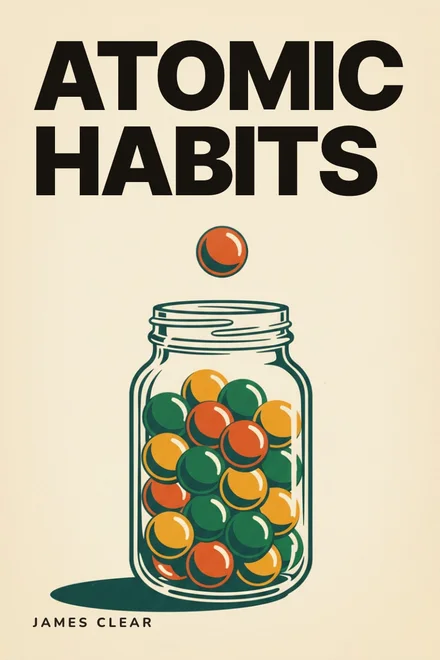
The other trap is size. A goal like fifty books a year sounds motivating, but it turns every missed evening into failure. In Atomic Habits, James Clear suggests making a new habit so small it’s hard to say no to. Two pages counts. So does one idea.
The habit was fine. The next step wasn’t clear.
What helps
- Read a little every day rather than a lot at weekends. A daily streak is a better measure than a yearly total.
- Keep a short list of what’s next, so you’re never stuck between books.
- Give yourself permission to drop a book. Fifty pages is a fair trial.
- Use summaries as a trailer. Sample a book’s big ideas first, then read in full the ones you can’t stop thinking about.
- Pair reading with something you already do: the commute, lunch, the ten minutes before bed.
How to remember what you read
Reading more only helps if some of it sticks. The most reliable method learning researchers know is retrieval practice: trying to recall an idea, rather than reading it again. A quick quiz, explaining a book to a friend or writing down three ideas from memory all count. Each time you pull an idea back out, you make it easier to find next time.
The second habit is to use one idea straight away. Pick one thing from each book and try it that week. An idea you’ve acted on is much harder to forget than one you’ve only read.

Apps can help with all of this: choosing what to read, keeping the habit going and testing what you remember. Here are six that do it in different ways.
We make BrainDrop, so we’ve kept the comparisons factual and linked each app’s App Store listing. Facts checked .
-
1Blinkist
Best for listening on the go
Blinkist is a good way to sample books you won’t get to in full. Its summaries take about 15 minutes to read or listen to, and its editors pick one free summary a day on the Basic plan.
Worth knowing The biggest library here, with over 9,000 titles and audio for each. Blinkist Basic is free, with one editor-picked summary a day.
-
2BrainDrop
Best for daily, illustrated reading
BrainDrop is built around the daily habit: streaks with freezes for the day you forget, daily quests and gems at reading milestones. Every idea ends with one thing to try, and a quick quiz after each book is retrieval practice built in. Own the book already? The book scanner finds its key ideas from a photo of the cover.
Worth knowing iPhone only, and its library is smaller than the big names, though growing. Free to download with a free trial, then BrainDrop Pro.
-
3Shortform
Best for deep, study-grade guides
Shortform’s chapter-by-chapter guides are the closest thing here to reading the book, with commentary that links its ideas to others. Good for books you want to study.
Worth knowing A paid subscription with no free tier, and guides that take several sittings. Works well on the web too.
-
4Headway
Best for guided self-growth plans
Headway’s personalised daily plan tells you what to read next, and you can save key insights as flashcards to review.
Worth knowing More than 1,700 summaries, on iPhone and Android. Free to download with a free trial of Headway Premium.
-
5Instaread
Best for classic text and audio
Instaread offers thousands of non-fiction summaries in text or audio, each 15 minutes or less.
Worth knowing A steady text and audio library in the thousands. A 7-day free trial, then monthly or yearly.
-
6getAbstract
Best for business reading at work
getAbstract is strongest on business books, with over 25,000 summaries and ratings to help you pick.
Worth knowing Built for work, with over 25,000 titles and team plans. A short free trial, then Starter or Pro.