Productivity · Book summary
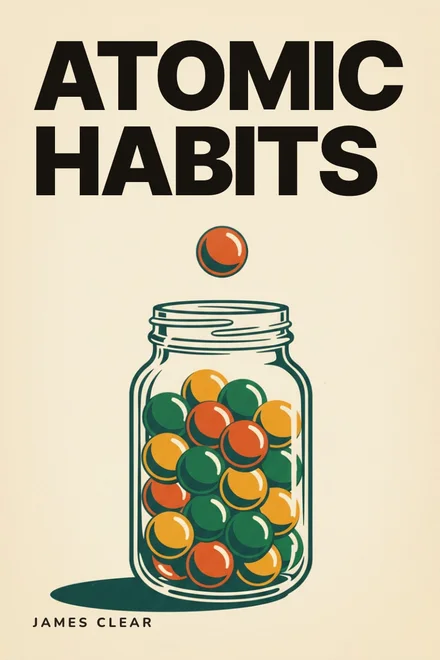
Atomic Habits summary
James Clear argues that big results come from tiny habits repeated until they compound. Goals tell you where you want to go; the systems you run every day decide whether you get there. Change who you believe you are, then make good habits obvious, attractive, easy and satisfying.
Atomic Habits summary: the core argument
Atomic Habits, published in 2018, starts from a simple observation: people overestimate what one big decision can do and underestimate what a small daily action does over years. Clear’s favourite picture is compounding. Getting one per cent better each day sounds trivial, but kept up for a year it multiplies into something roughly thirty-seven times better. Getting one per cent worse each day does the opposite, just as quietly.
The catch is that compounding is invisible at first. Clear calls this stretch the plateau of latent potential: you put in the work, nothing seems to happen, and most people quit just before the results show. Ice that sits at minus five degrees doesn’t melt as it warms to minus one; it melts at zero, and all the warming before that was stored, not wasted.
From there the book makes two moves. The first is about identity. Most people try to change outcomes (lose ten kilos) or processes (go to the gym), but the deepest layer is who you think you are. A habit sticks when it becomes evidence for an identity you want, such as “I’m someone who doesn’t miss workouts”. The second move is practical. Clear breaks every habit into a loop of cue, craving, response and reward, and turns each step into a law you can design around. To build a good habit, make it obvious, attractive, easy and satisfying. To break a bad one, invert each law: make it invisible, unattractive, difficult and unsatisfying.
The result is less a book about willpower than about design. Clear’s view is that people who seem disciplined mostly arrange their lives so they need less discipline.

Key ideas from Atomic Habits
The book’s main ideas, each with one practical takeaway. In BrainDrop, Atomic Habits is 9 short illustrated cards with a quick quiz at the end; this page is the written version.
1Systems beat goals
Winners and losers usually share the same goals. Every Olympian wants a gold medal and every candidate wants the job, so the goal can’t be what separates them. What differs is the system: the daily process that produces results. Clear’s example is British Cycling, which went from decades of mediocrity to dominating the sport by improving hundreds of tiny things by about one per cent each, from bike seats to the pillows riders slept on.
Goals also create a strange problem: once you reach one, the behaviour that got you there often stops. A system has no finish line, so it keeps working after the milestone.
Try this
Take one goal you care about and write down the smallest daily action that would move it forward. Judge yourself on whether you did the action, not on the result.
2Change your identity, not just your behaviour
Clear argues that the most lasting habits are identity-based. Instead of “I want to read more”, the shift is “I’m a reader”. Every time you act, you cast a vote for the kind of person you are becoming. You don’t need a unanimous vote, only a majority, which is why one missed day doesn’t undo you.
This also explains why some habits feel natural and others feel like a fight. When a behaviour clashes with how you see yourself, you’re pushing against your own story.
Try this
Finish the sentence “I’m the kind of person who…” for one habit you want, then ask what that person would do in the next ten minutes.
3Make it obvious
Many habits fail because the cue is vague. “I’ll exercise more” has no time or place, so it never fires. Clear recommends an implementation intention: “I will [behaviour] at [time] in [location].” Research on these plans found that people who wrote them were far more likely to follow through.
His other tool is habit stacking: “After [current habit], I will [new habit].” Your existing routines become the cues. Environment matters too. Leave the guitar on its stand in the living room, not in its case in a cupboard.
Try this
Write one habit stack for tomorrow morning, for example: “After I pour my coffee, I will read one page.”
4Make it attractive
We act on habits because we anticipate a reward, and the anticipation itself pulls us forward. Clear suggests temptation bundling: pair something you need to do with something you already want, such as only listening to a favourite podcast while walking.
Culture is the other big lever. We copy the people close to us, the many and the powerful. Joining a group where your desired behaviour is normal makes it feel less like effort and more like belonging.
Try this
Pick one chore and one small pleasure, and allow yourself the pleasure only while doing the chore this week.
5Make it easy
The law of least effort says we drift towards the option that takes the least work. So instead of relying on motivation, reduce friction for good habits and add it to bad ones. Lay out your running kit the night before; log out of the app you scroll too much.
Clear also points out that repetitions matter more than time. In a story he retells, a photography class graded on the number of photos taken produced better work than the half graded on one perfect photo. Practice beats planning.
Try this
Remove one step between you and a good habit tonight, and add one step between you and a bad one.

6Use the two-minute rule
Any new habit should start with a version that takes under two minutes. “Read before bed” becomes “read one page”. “Do yoga” becomes “get the mat out”. The point isn’t to stop at two minutes forever; it’s to master the habit of showing up before you try to improve it.
A habit has to be established before it can be optimised. Starting tiny makes the first step so easy that skipping it feels silly.
Try this
Shrink one habit you keep putting off into a two-minute version and do it today, even if it feels too small to count.
7Make it satisfying, and never miss twice
We repeat what feels good now, but many good habits pay off only later. Clear’s fix is to add an immediate reward and to make progress visible. A habit tracker, even a calendar with crosses on it, turns invisible progress into something you can see and don’t want to break.
Streaks will break eventually. The rule that matters is never to miss twice. One missed day is an accident; two is the start of a new habit.
Try this
Put a simple tracker where you’ll see it and mark each day you do your habit. If you miss one, make the next day non-negotiable.
8Stay just beyond your comfort zone
In the book’s advanced section, Clear warns that habits can turn into autopilot and stop you improving. He recommends the Goldilocks rule: we stay motivated by tasks right at the edge of our ability, neither too easy nor too hard.
He also suggests reviewing your habits now and then, so the things that once helped you don’t quietly limit you.
Try this
Once a habit feels automatic, add one small challenge to it, then review it again in a month.
Atomic Habits quotes
Quoted from the book and checked against it.
“You do not rise to the level of your goals. You fall to the level of your systems.”
“Every action you take is a vote for the type of person you wish to become.”
Chapter-by-chapter overview
Atomic Habits has an introduction, twenty chapters and a conclusion, grouped into six parts.
- Introduction Clear’s own story: a serious injury in his school years and the small habits that helped him recover.
- The fundamentals (chapters 1–3) Why tiny changes compound, how habits shape identity, and the four-step habit loop.
- The first law: make it obvious (chapters 4–7) Noticing cues, implementation intentions, habit stacking, designing your environment and why self-control is mostly about avoiding temptation.
- The second law: make it attractive (chapters 8–10) Temptation bundling, the pull of family and friends, and finding the causes of bad habits.
- The third law: make it easy (chapters 11–14) Repetitions over perfection, the law of least effort, the two-minute rule and commitment devices.
- The fourth law: make it satisfying (chapters 15–17) Immediate rewards, habit tracking and accountability partners.
- Advanced tactics (chapters 18–20) and conclusion Matching habits to your strengths, the Goldilocks rule, the downside of habits and the idea that small changes add up.
Who should read Atomic Habits?
Atomic Habits suits anyone who keeps starting things and stopping them: exercise, reading, saving, studying. It’s practical, plainly written and full of short examples, so it works well as a first book on behaviour change.
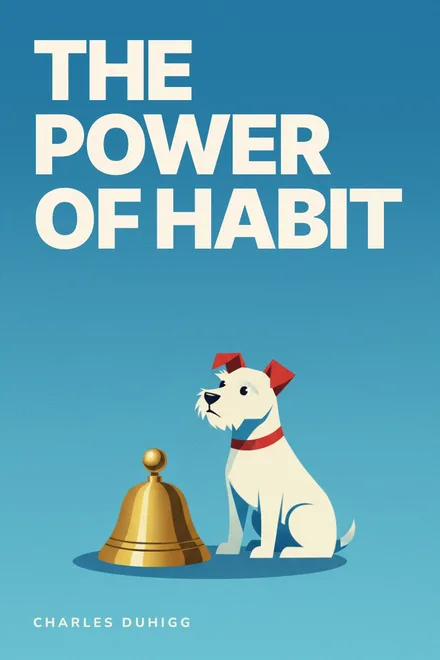
If you’ve already read Charles Duhigg’s The Power of Habit, Atomic Habits feels like the how-to companion. If you want the research in depth, you may find it light, and the books in the list below go further.
Criticisms of Atomic Habits
The most common criticism is that the book repackages existing research, including Duhigg’s habit loop and work on implementation intentions, rather than adding new findings. Clear is open about his sources, but readers who know the field will find few surprises.
Some readers find it repetitive, with the central idea clear long before the end. Others note that the compounding maths is a metaphor: real progress isn’t a smooth one per cent a day, and some goals need big decisions rather than small habits. Finally, the book says little about the structural reasons people struggle, such as money, time or health, so it can make change sound more personal than it always is.
Books like Atomic Habits
Atomic Habits summary: questions
What is the main lesson of Atomic Habits?
Small habits repeated consistently compound into large results, so focus on building good systems and a matching identity rather than chasing goals with willpower.
How many chapters are in Atomic Habits?
Twenty, plus an introduction and a conclusion. They are grouped into the fundamentals, one part for each of the four laws, and a section of advanced tactics.
What are the four laws of Atomic Habits?
Make it obvious, make it attractive, make it easy and make it satisfying. To break a bad habit, invert them: make it invisible, unattractive, difficult and unsatisfying.
What is the two-minute rule?
When you start a new habit, scale it down to something that takes under two minutes, such as reading one page. You master showing up first and improve the habit later.
Is Atomic Habits worth reading?
Yes, if you want a clear, practical system for changing behaviour. If you already know the habit research well, a summary like this one may give you most of what you need.
Atomic Habits vs The Power of Habit: which should I read?
The Power of Habit explains why habits work, with more stories and research. Atomic Habits is the more practical of the two, with specific techniques. Many people read Duhigg for the why and Clear for the how.
Read Atomic Habits as illustrated cards in BrainDrop
The 9 ideas from Atomic Habits, each told as a short illustrated story with one small thing to try today, then a quick quiz to make it stick. Free to download, with a free trial.
- Focus on Systems, Not Goals
- Make Habits Attractive
- Start Small to Build Momentum
- Use the Two-Minute Rule
- Environment Shapes Habits
- Track Your Progress
- Join a Community
- Make It Obvious
- Be Patient with Change
Choosing an app?
How to replace doomscrolling · BrainDrop vs Blinkist · Best book summary apps in 2026