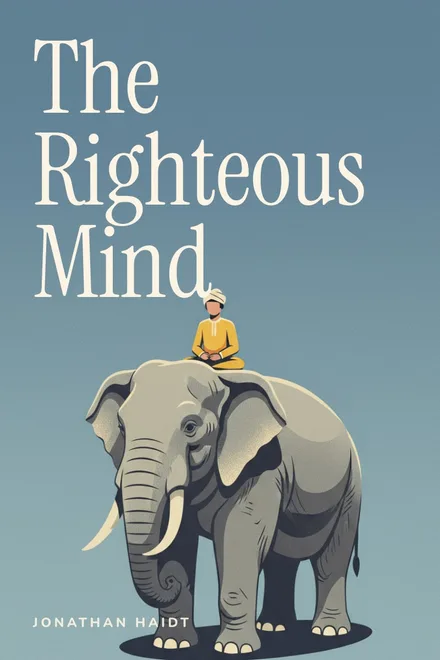
Psychology · Book summary
The Righteous Mind summary
Moral judgments start with intuition, and reasoning follows.
We feel first and reason later. That's why politics divides good people.
The Righteous Mind key ideas
In BrainDrop, each idea is a short illustrated story with one small thing to try today and a quick quiz. Here are the headlines.
Intuitions Come First
Moral dumbfounding. when Haidt's subjects couldn't justify their objection to a harmless taboo story, they still insisted it was wrong.
Reason Is a Press Secretary
Hypnotic disgust. in Wheatley and Haidt's study, people made to feel disgust at a neutral word condemned a blameless student and invented reasons to justify it.
We Care About Looking Good
The Ring of Gyges. in Plato's Republic, Glaucon asks whether anyone would stay moral if invisibility let them escape all consequences.
Morality Is More Than Harm
Harmless taboos. in Haidt's 1993 study, working-class Brazilians often condemned harmless acts like eating the family dog, while wealthy American students mostly shrugged.
Six Moral Taste Buds
A stay in India. living in Bhubaneswar in 1993 showed Haidt how rules about purity, hierarchy and community can form a coherent moral world.
Liberals and Conservatives Taste Differently
Who understands whom. in a 2012 study, conservatives and moderates predicted the other side's moral views better than people who were very liberal.
90 Percent Chimp, 10 Percent Bee
A rally around the flag. after September 11, 2001, Haidt and millions of other Americans felt a sudden urge to display flags and unite with strangers.
The Hive Switch
Muscular bonding. drafted in 1941, William McNeill found that hours of marching in unison gave him a powerful sense of belonging.
Religion Binds and Blinds
Costly communes. Richard Sosis found religious 19th-century American communes outlasted secular ones, and those demanding the biggest sacrifices lasted longest.
The Righteous Mind summary: questions
What is The Righteous Mind about?
The Righteous Mind by Jonathan Haidt in one line: Moral judgments start with intuition, and reasoning follows.
What are the key ideas in The Righteous Mind?
BrainDrop tells The Righteous Mind as 9 key ideas: Intuitions Come First; Reason Is a Press Secretary; We Care About Looking Good; Morality Is More Than Harm; Six Moral Taste Buds; Liberals and Conservatives Taste Differently; 90 Percent Chimp, 10 Percent Bee; The Hive Switch; Religion Binds and Blinds.
How long does The Righteous Mind take in BrainDrop?
About 4–5 min. It's 9 short illustrated ideas, each with one small thing to try today, then a quick quiz. Tap Ask BrainDrop on any idea to go deeper.
Is there a free The Righteous Mind summary?
Yes: this page lists every key idea from The Righteous Mind for free. The full illustrated stories are in the BrainDrop app, free to download with a free trial, then BrainDrop Pro.
Read the full stories in BrainDrop
Every idea from The Righteous Mind, told as an illustrated story you swipe through in minutes. Free to download, with a free trial.
More psychology books
Choosing an app?
Self-improvement apps that make learning stick · BrainDrop vs Imprint · Best book summary apps in 2026