History · Book summary
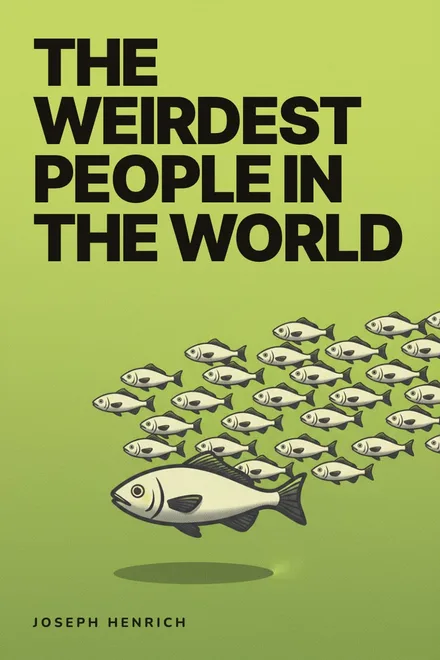
The WEIRDest People in the World summary
The medieval Church's family rules reshaped Western minds.
Western minds are unusual, and the church's marriage rules helped make them so.
The WEIRDest People in the World key ideas
In BrainDrop, each idea is a short illustrated story with one small thing to try today and a quick quiz. Here are the headlines.
Literacy Rewired Our Brains
Luther's reading revolution. Protestant insistence that everyone read the Bible spread schools and literacy, and in Prussia Protestantism clustered around Wittenberg, where the Reformation began.
WEIRD Minds Are Outliers
The passenger's dilemma. about 90 percent of people surveyed in Canada, Switzerland and the US wouldn't lie to protect a reckless friend, while most in Nepal, Venezuela and South Korea would.
The Church Dismantled the Clans
The Marriage and Family Program. from the early Middle Ages, the Western Church banned cousin marriage, polygamy and unions with in-laws, eventually reaching as far as sixth cousins.
Kinship Shapes How We Think
Italy's natural experiment. Italian provinces with more cousin marriage had fewer voluntary blood donations, a sign of less help offered freely to strangers.
Rules Without Enforcers
The parking ticket test. UN diplomats immune from New York parking fines racked up unpaid tickets in line with norms back home, from hundreds each to almost none.
Markets Teach Fairness to Strangers
The Machiguenga surprise. in Henrich's money-splitting game in the Peruvian Amazon, Machiguenga players offered anonymous partners far less than American students did.
City Air Makes You Free
Free towns. in many medieval charter towns, a serf who lived there for a year and a day could win freedom, and townspeople joined guilds, universities and fraternities by choice.
Time Became Money
Time is money. Benjamin Franklin tracked 13 virtues in a daily table and planned his day hour by hour, a model of WEIRD self-discipline.
Innovation Comes From Networks
Watt's network. James Watt's steam engine breakthrough grew from repairing another inventor's model and from his ties with chemist Joseph Black and manufacturer Matthew Boulton.
The WEIRDest People in the World summary: questions
What is The WEIRDest People in the World about?
The WEIRDest People in the World by Joseph Henrich in one line: The medieval Church's family rules reshaped Western minds.
What are the key ideas in The WEIRDest People in the World?
BrainDrop tells The WEIRDest People in the World as 9 key ideas: Literacy Rewired Our Brains; WEIRD Minds Are Outliers; The Church Dismantled the Clans; Kinship Shapes How We Think; Rules Without Enforcers; Markets Teach Fairness to Strangers; City Air Makes You Free; Time Became Money; Innovation Comes From Networks.
How long does The WEIRDest People in the World take in BrainDrop?
About 4–5 min. It's 9 short illustrated ideas, each with one small thing to try today, then a quick quiz. Tap Ask BrainDrop on any idea to go deeper.
Is there a free The WEIRDest People in the World summary?
Yes: this page lists every key idea from The WEIRDest People in the World for free. The full illustrated stories are in the BrainDrop app, free to download with a free trial, then BrainDrop Pro.
Read the full stories in BrainDrop
Every idea from The WEIRDest People in the World, told as an illustrated story you swipe through in minutes. Free to download, with a free trial.
More history books



Choosing an app?
The best book summary apps in 2026, compared · BrainDrop vs Shortform · Best book summary apps in 2026