
Tech & future · Book summary
Sapiens summary
Yuval Noah Harari tells the story of our species in four turns: the Cognitive, Agricultural, unifying and Scientific revolutions. His central claim is that humans conquered the planet because we can believe shared stories, such as gods, nations, money and companies, which let millions of strangers cooperate.
Sapiens summary: the core argument
Sapiens: A Brief History of Humankind first appeared in Hebrew in 2011 and in English in 2014. Harari, a historian at the Hebrew University of Jerusalem, sets out to explain how an unremarkable ape, one of several human species alive a hundred thousand years ago, came to dominate the Earth.
His answer is cooperation at scale. Chimpanzees cooperate in small groups of animals who know each other. Humans cooperate in groups of thousands or millions of strangers, and Harari argues we can do this because of a change in how we think and talk, roughly seventy thousand years ago. Our ancestors gained the ability to talk about things that don’t physically exist: spirits, tribes, laws, and later limited companies and human rights. Harari calls these shared fictions or the imagined order. They aren’t lies; they are stories that work because everyone believes them.
From there the book moves through three more turning points. Farming, from about twelve thousand years ago, fed more people but, Harari argues, made the average life harder. Money, empires and universal religions then gradually unified humanity into one global system. Finally the Scientific Revolution, from about five hundred years ago, began when Europeans admitted how much they didn’t know and paired science with empire and capitalism.
Running through it all is an uncomfortable question. We have far more power than any earlier humans, but are we any happier? Harari ends by asking what a species that can redesign life itself should want.

Key ideas from Sapiens
The book’s main ideas, each with one practical takeaway. In BrainDrop, Sapiens is 9 short illustrated cards with a quick quiz at the end; this page is the written version.
1Shared myths let strangers cooperate
Harari’s most quoted idea is that large-scale human life runs on stories. A company like Peugeot, his example, has no physical existence: you can destroy every factory and the company survives, because it exists as a legal fiction that lawyers, courts and shareholders all believe in. Nations, currencies and human rights work the same way.
This isn’t meant as cynicism. These fictions are what let two people who have never met trust each other enough to trade, obey the same law or fight on the same side.
Try this
Pick one thing you rely on today, such as your bank, your employer or your passport, and notice which parts of it exist only because many people agree they do.
2The Cognitive Revolution
Around seventy thousand years ago, Harari argues, Homo sapiens began to think and talk in new ways. Language allowed gossip, which helped bands of about a hundred and fifty people keep track of who could be trusted, and then fiction, which let groups grow far beyond that size.
He points to the lion-man from the Stadel cave in Germany, an ivory figure about thirty-two thousand years old with a lion’s head and a human body, as early evidence of imagining things that don’t exist.
Try this
Next time you join a new group, notice which shared stories, rules or in-jokes hold it together.
3The Agricultural Revolution was a trap
Farming is usually told as progress. Harari tells it as a bargain that went wrong for individuals. Foragers had varied diets, shorter working days and fewer infectious diseases. Early farmers worked harder, ate less varied food and suffered from back problems, famine and war over land.
Wheat, he jokes, domesticated us rather than the other way round. The species grew in number, but each extra mouth made going back impossible.
Try this
When you weigh a change in your own life, ask whether ‘more’ (money, space, followers) will actually make your days better, or just bigger.
4Money is the most universal system of trust
Money, in Harari’s account, is the most successful story ever told. Christians and Muslims who disagreed about God still agreed about gold and silver. Money lets strangers cooperate without trusting each other’s character, only the shared belief in the coin.
Empires and universal religions played a similar unifying role. Many empires were brutal, yet they spread languages, laws, roads and ideas that most of the world now takes for granted.
Try this
Look at a banknote or a card payment and ask what you are really trusting when you accept it.
5Science began with admitting ignorance
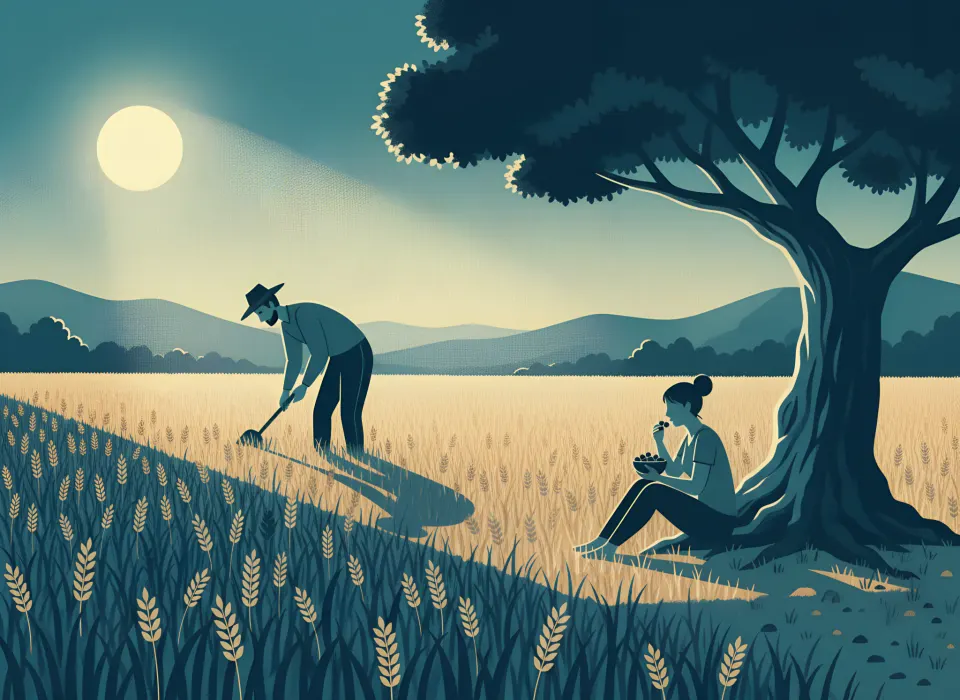
Earlier traditions mostly assumed the important things were already known. The Scientific Revolution, Harari argues, started with the opposite attitude: we don’t know, so let’s observe, measure and test. He notes that maps from the period began to show blank spaces, which invited exploration.
Science alone didn’t change the world. It joined forces with European empires, which funded voyages and research, and with capitalism, which reinvested profits in growth on the promise that the future would be richer.
Try this
Write down one belief you hold strongly and one piece of evidence that would change your mind about it.
6More power hasn’t made us happier
Near the end, Harari asks whether all this progress has made people happier, and finds the answer unclear. Happiness seems to depend more on expectations, relationships and a sense of meaning than on wealth or comfort. Consumer culture, he argues, teaches us to want more, which keeps satisfaction just out of reach.
He draws on research and on Buddhist ideas to suggest that chasing pleasant feelings is a poor route to contentment.
Try this
Notice one want this week that came from an advert or a feed, and ask whether getting it would change anything that matters to you.
7We may become something other than Sapiens
The final chapter looks ahead. Biotechnology, cyborg engineering and new forms of life could change human beings more in the next century than in all of history so far. Harari doesn’t predict the outcome; he argues that the most important question is what we want to want.
This thread became the starting point for his next book, Homo Deus.
Try this
Ask yourself which of today’s technologies you would happily see change the human body, and where you’d draw the line.
Sapiens quotes
Quoted from the book and checked against it.
“There are no gods in the universe, no nations, no money, no human rights, no laws, and no justice outside the common imagination of human beings.”
“The Agricultural Revolution was history’s biggest fraud.”
Chapter-by-chapter overview
Sapiens has twenty chapters in four parts, followed by an afterword.
- Part One: The Cognitive Revolution (chapters 1–4) How Homo sapiens came to outcompete other human species, how foragers lived, and how humans spread across the world, wiping out many large animals as they went.
- Part Two: The Agricultural Revolution (chapters 5–8) Why farming made life harder for most individuals, how imagined orders kept large societies together, the invention of writing, and the hierarchies of class, race and gender.
- Part Three: The Unification of Humankind (chapters 9–13) Money, empires and religions as the forces that gradually joined humanity into one global system.
- Part Four: The Scientific Revolution (chapters 14–20) The discovery of ignorance, the partnership of science, empire and capitalism, the Industrial Revolution, whether we are happier, and the possible end of Homo sapiens.
- Afterword: The Animal that Became a God A short reflection on human power without clear purpose.
Who should read Sapiens?
Sapiens is for curious readers who want the big picture of human history in one sitting rather than a textbook. It’s lively, provocative and easy to read, which is why it became a global bestseller.
It’s less suited to readers who want careful, footnoted history. Treat it as a set of bold arguments to think with, not the last word.
Criticisms of Sapiens
Historians and anthropologists have criticised Sapiens for sweeping generalisations and for presenting contested ideas as settled. The claim that farming was a ‘fraud’ simplifies a long, varied process, and Harari’s picture of happy, healthy foragers is debated.
Others object to calling human rights and nations ‘fictions’, arguing it blurs the line between ideas people choose and facts about the world. Some reviewers also feel the book’s confident style leaves too little room for uncertainty. Admirers reply that it was always meant as a provocative overview, and judged that way it succeeds.
Books like Sapiens

Sapiens summary: questions
What is the main idea of Sapiens?
That humans came to dominate the planet because we can create and believe shared stories, such as religions, nations, money and companies, which let huge numbers of strangers cooperate.
How many chapters are in Sapiens?
Twenty, divided into four parts: the Cognitive Revolution, the Agricultural Revolution, the Unification of Humankind and the Scientific Revolution, plus an afterword.
What are the four revolutions in Sapiens?
Harari’s book is organised around the Cognitive Revolution (about 70,000 years ago), the Agricultural Revolution (about 12,000 years ago), the gradual unification of humankind, and the Scientific Revolution (about 500 years ago).
Is Sapiens worth reading?
Yes, if you want an engaging, thought-provoking overview of human history. Read it alongside more cautious historians if you want to know where experts disagree with Harari.
Is Sapiens historically accurate?
Its broad timeline follows mainstream research, but many specific claims and interpretations are contested by specialists. It is best read as an argument rather than a reference book.
Sapiens vs Guns, Germs and Steel: which should I read?
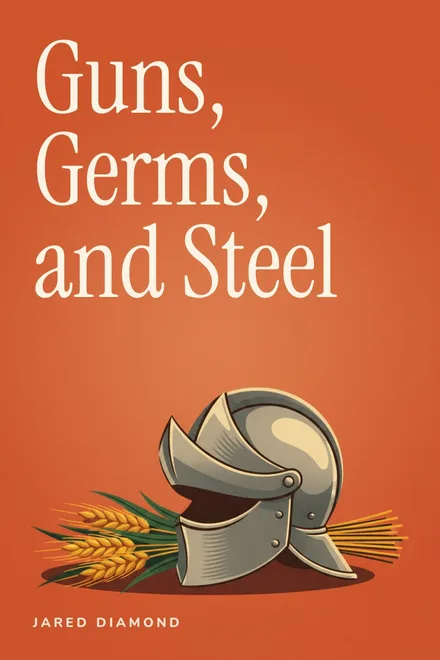
Guns, Germs and Steel focuses on why different societies developed unequally, with more geographical detail. Sapiens covers a wider sweep, from early humans to the future, with more on ideas and belief.
Read Sapiens as illustrated cards in BrainDrop
The 9 ideas from Sapiens, each told as a short illustrated story with one small thing to try today, then a quick quiz to make it stick. Free to download, with a free trial.
- The Power of Shared Myths
- Cognitive Revolution: A New Dawn
- Agricultural Revolution’s Double-Edged Sword
- Unifying Humanity through Trade
- The Role of Empires in History
- The Illusion of Happiness in Consumerism
- Science and Religion: A Complex Relationship
- Future of Humanity: A Technological Frontier
- The Importance of Historical Perspective
Choosing an app?
The best book summary apps in 2026, compared · BrainDrop vs Headway · Best book summary apps in 2026