Business · Book summary
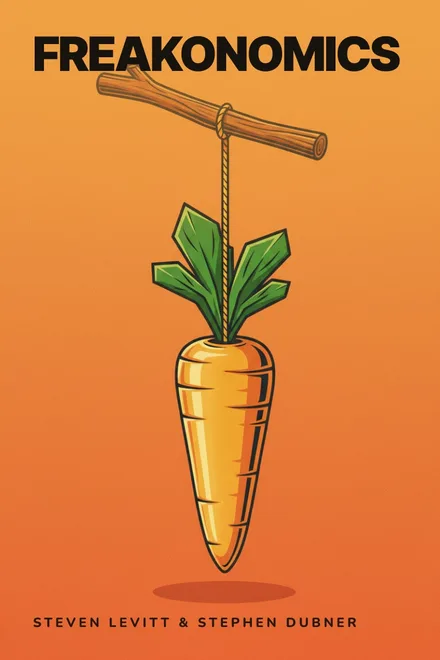
Freakonomics summary
Follow the incentives, and everyday life looks different.
Follow the incentives and the world's strangest facts start to make sense.
Freakonomics key ideas
In BrainDrop, each idea is a short illustrated story with one small thing to try today and a quick quiz. Here are the headlines.
Incentives Can Backfire
The day-care fine. A small fine for late pickups in Haifa made parents come late more often, not less.
High Stakes Breed Cheating
Cheating teachers. When Chicago tied rewards to test scores, Levitt's algorithm spotted cheating in about 5 percent of classrooms.
Most People Are Honest-ish
The bagel honor system. Paul Feldman's office bagel business showed most people paid, roughly nine in ten.
Experts Have Their Own Incentives
Agents' own homes. Real-estate agents kept their own houses on the market longer and sold them for about 3 percent more.
The Tournament Trap
Dealers living with mom. A Chicago gang's financial records showed street dealers earned about $3.30 an hour.
Question the Obvious Explanation
The crime drop nobody predicted. Experts warned of a 1990s crime wave, but crime fell sharply instead.
Fear the Pool, Not the Gun
The real risk. A US child is far likelier to drown in a home pool than be killed by a gun in a home.
Who Parents Are Matters Most
Books, not bedtime stories. Owning many books was linked to higher test scores, while regularly reading to kids wasn't.
A Name Isn't Destiny
Winner and Loser Lane. Two Harlem brothers defied their names: Winner was often arrested, Loser became a police sergeant.
Freakonomics summary: questions
What is Freakonomics about?
Freakonomics by Steven Levitt & Stephen Dubner in one line: Follow the incentives, and everyday life looks different.
What are the key ideas in Freakonomics?
BrainDrop tells Freakonomics as 9 key ideas: Incentives Can Backfire; High Stakes Breed Cheating; Most People Are Honest-ish; Experts Have Their Own Incentives; The Tournament Trap; Question the Obvious Explanation; Fear the Pool, Not the Gun; Who Parents Are Matters Most; A Name Isn't Destiny.
How long does Freakonomics take in BrainDrop?
About 4–5 min. It's 9 short illustrated ideas, each with one small thing to try today, then a quick quiz. Tap Ask BrainDrop on any idea to go deeper.
Is there a free Freakonomics summary?
Yes: this page lists every key idea from Freakonomics for free. The full illustrated stories are in the BrainDrop app, free to download with a free trial, then BrainDrop Pro.
Read the full stories in BrainDrop
Every idea from Freakonomics, told as an illustrated story you swipe through in minutes. Free to download, with a free trial.
More business books



Choosing an app?
The best book summary apps in 2026, compared · BrainDrop vs getAbstract · Best book summary apps in 2026